


PHASE III

Long-Term Climate Change Impact Analysis

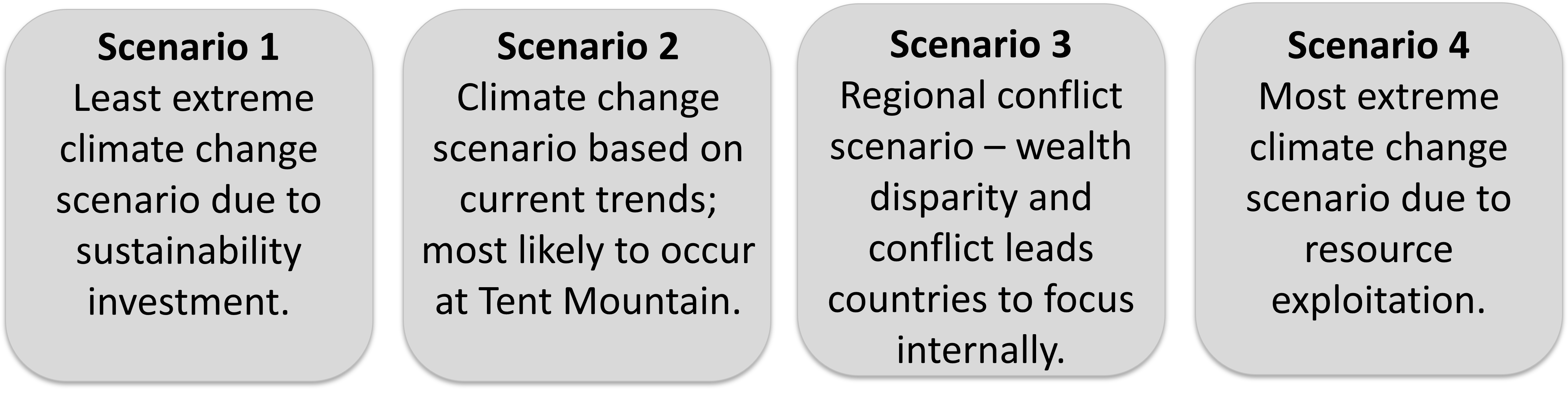
  • Projected future meteorological forcing data from four climate change scenarios, over the next 75 years, was used to simulate an ensemble of possible future streamflow records and assess the potential impacts of climate change on the project.
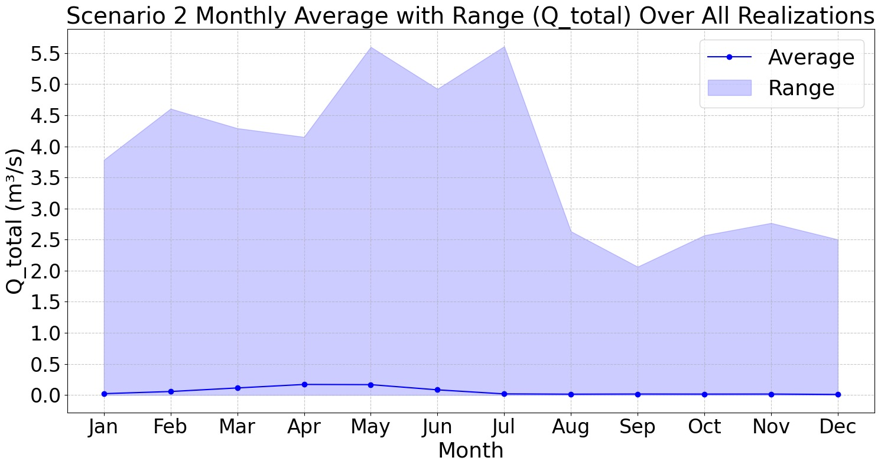
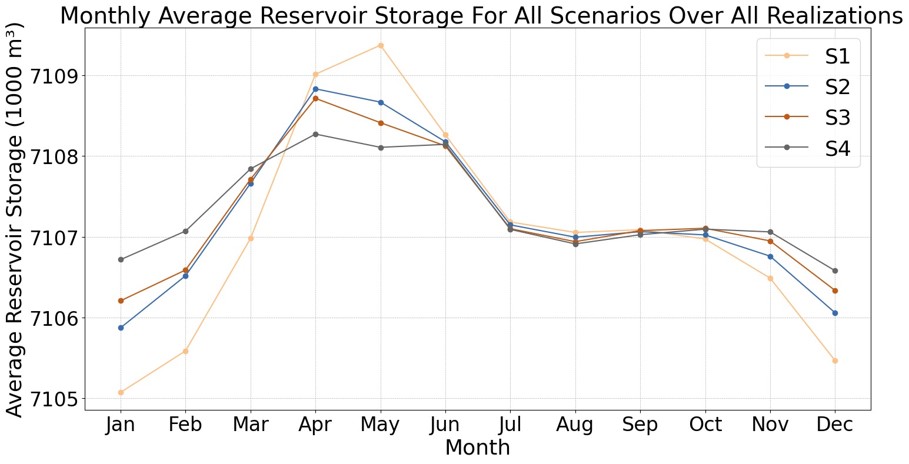
  • Scenario 2 was chosen due to its ability to replicate storage and outflow values, which resembled those of more extreme climate scenarios.
  • The average temperature at Tent Mountain rose by 5°C from historical records to Scenario 4, with precipitation values showing a slight increase on average as climate change intensified, characterized by wet months becoming slightly wetter and dry months slightly drier.

Mitigation and Adaptation plan

  • Extreme drought events are likely to increase with each of the scenario, so reducing the effects of evaporation is key to minimizing the impacts. Surface cover options such as Aquacaps and Shade Balls are the most effective solution to reduce evaporation by creating a floating barrier between the water surface and atmosphere.
  • Spillway management will be utilized during periods of high precipitation and flood occurrences to safely discharge excess water. These measures can be supplemented with emergency response plans and investment in infrastructure to increase reservoir storage capacity.
Contact
monique.beaulieu@ucalgary.ca
Land Acknowledgment

Land Acknowledgement: We would like to acknowledge that our University is located on Treaty 7 Territory, which is the traditional territory of the Blackfoot Confederacy, comprised of the Siksika, the Piikani, and the Kainai First Nations; the Tsuut’ina First Nation; and the Stoney Nakoda, which includes the Chiniki, Bearspaw, and Goodstoney First Nations. Treaty 7 is also home to the Métis Nation of Alberta – Region III.

References:

[1] Evolve Power. "Tent Mountain Pumped Hydro Energy Storage." [Online]. Available: https://evolvepower.ca/what-we-do/tent-mountain-pumped-hydro-energy-storage/. [March 23, 2024].